The most-asked question on Plinko-related search queries is some variant of “is Plinko legit.” The answer is unusually two-sided: yes for the licensed-casino category we cover throughout this site, and emphatically no for an entirely separate category of standalone phone apps that share the Plinko name and almost nothing else. The collision of these two things under one name is the single largest source of confusion in modern Plinko, and the cost of that confusion is significant — both money lost to the scam side and a halo of skepticism cast unfairly across the legitimate side. This page separates them carefully and explains how to evaluate any Plinko-branded product you encounter.
The standing position of this site: licensed casino Plinko is a legitimate, regulated gambling product. Some standalone Plinko phone apps are sophisticated, large-scale deceptive operations that have collected hundreds of millions of dollars in advertising revenue while paying out a small fraction of what their advertising suggests. Distinguishing the two is straightforward once you know the signals to look for.
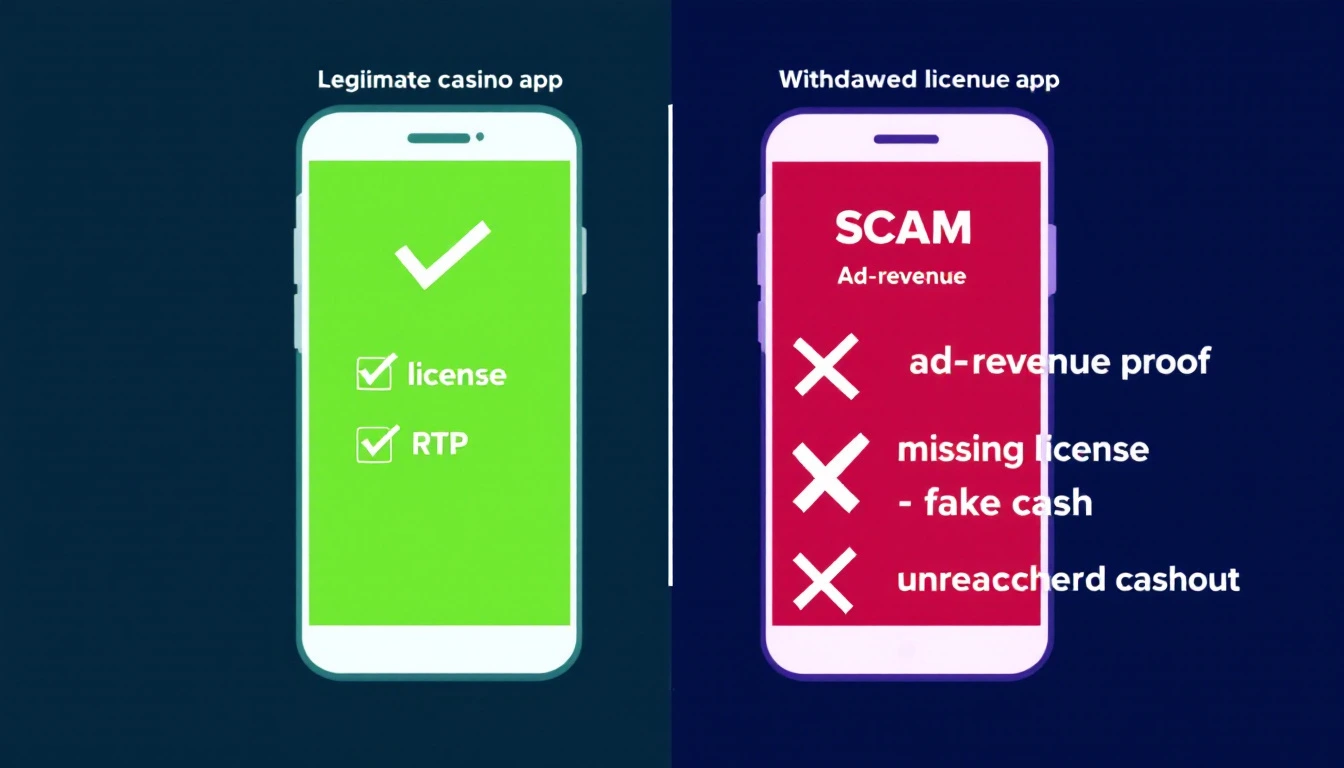
The two kinds of Plinko
The first thing to understand is that “Plinko” in 2026 names two products that share only a chip-and-pegs visual.
Type A: Casino Plinko. Hosted at licensed gambling operators (Stake, BC.Game, Roobet, TrustDice, and a few dozen others, plus integrations of provider games like BGaming Plinko and Spribe Plinko). Played for real money you deposit; pays out in real money you can withdraw; subject to licensing, audited or provably fair RNG, and a regulatory framework. This is the Plinko this entire site covers across casino reviews, game guides, strategy, RTP, and provably fair.
Type B: Standalone Plinko apps. Distributed via Apple App Store and Google Play. Marketed via TikTok, Instagram, and YouTube short ads promising large cash prizes for casual play. The “money” you accumulate inside the app is typically engagement points that, per terms of service, require unrealistic redemption thresholds, mandatory ad-watching, referral quotas, or simply never become withdrawable. Many are not even gambling apps in a strict legal sense — they avoid casino regulation by structuring the cash payouts as promotional rewards subject to terms that effectively make them unredeemable.
Type A is what this site means by Plinko. Type B is what most consumer complaints about Plinko refer to. The names are identical; the products are categorically different.
Casino Plinko: why it is legit
Casino Plinko has the standard structural protections of regulated gambling. The shorthand:
Licensing. The major operators are licensed by recognized gambling authorities — Curaçao (most crypto operators), Malta Gaming Authority (some EU-focused operators), UK Gambling Commission (UK-licensed operators), Kahnawake (some North American operators). Licensing is not a guarantee of perfect behavior, but it places the operator inside a framework where bad behavior has consequences. A licensed operator with a complaint pattern can be sanctioned, fined, or have its license revoked.
Audited or provably fair RNG. The Plinko outcome is determined by either a third-party-audited random number generator (with audit certificates from firms like eCOGRA, iTech Labs, or GLI) or a provably fair cryptographic system (HMAC-SHA256 with player-verifiable seeds — see the provably fair pillar). Both mechanisms are designed to prevent the operator from manipulating individual outcomes.
Published RTP. Legitimate Plinko operators display per-game RTP in the game info modal — typically 97-99 percent for major games. The RTP is a fixed mathematical property of the multiplier table and is verifiable independently of operator claims.
Verifiable withdrawal history. Legitimate operators process withdrawals consistently. The withdrawal SLA varies — fast at top-tier crypto operators (5-60 minutes for BTC), slower at fiat operators (1-5 business days) — but the operator’s track record is observable across Trustpilot, AskGamblers, casino-review sites, and our own measured data. A licensed operator that consistently fails to pay withdrawals is the rare exception, not the rule.
Customer support and dispute mechanisms. Licensed operators provide customer support, often 24/7, and disputes can be escalated to the licensing authority if direct resolution fails. AskGamblers, the Casino Guru complaint resolution service, and the operator’s own internal escalation paths all exist.
Responsible gambling tools. Deposit limits, session timers, self-exclusion options. These are required by most reputable licensing regimes and standard on the major Plinko casinos.
The honest framing: casino Plinko is not zero-risk — it is gambling, it has a built-in house edge, and even legitimate operators occasionally have customer-service problems. But it is a regulated product with verifiable protections, and the failure modes are mostly the ordinary failure modes of any consumer financial product.
Plinko phone apps: why they are not
The standalone-app category is structured very differently. The pattern is consistent across the dozens of apps we have documented.
Aggressive advertising on social platforms. The apps spend tens of millions of dollars per quarter on TikTok, Instagram, and YouTube short-form video ads. The ads show a creator (often a paid influencer) playing the app, watching a chip drop, hitting a large multiplier, and “withdrawing” hundreds or thousands of dollars. The implication is that the app is a fast path to easy money. The reality is that the withdrawal in the ad either never happened, happened under terms the average user cannot meet, or was specifically engineered for the ad.
Apparent payouts that turn into thresholds. A new user who downloads the app plays a few rounds, accumulates an apparent balance (say $50), and clicks withdraw. The withdrawal interface reveals a minimum threshold — $100, $200, often higher — that requires significant additional play to reach. The user plays more, accumulates more apparent balance, but the threshold itself rises as the balance climbs (a common pattern called “shifting goalposts”). Some apps require the user to watch hundreds of ads per dollar to advance toward the threshold.
Mandatory friend referrals. Some apps require N referred-friend signups before any withdrawal is processed. The user pesters friends; friends sign up; the next withdrawal requires N+M more referrals. The redemption is structurally impossible.
Cash-out withholding for “verification.” Some apps add a verification step at the cashout point — bank account linking, identity document upload, payment of a “small processing fee” — that is the actual transaction. The user pays the fee; the cashout never arrives; the support contact goes silent.
Terms-of-service redirection. Buried deep in the TOS is language that the in-app “balance” is “promotional credits” rather than money, that the company makes no guarantee any specific balance will be redeemable, and that the company reserves the right to terminate accounts and forfeit balances at its discretion. The advertising never mentions any of this.
Burst-and-burn lifecycle. A given app launches with heavy advertising, accumulates millions of installs, attracts complaints, gets removed from app stores or quietly de-listed, and is replaced by a near-identical clone under a new name from the same operator network. The pattern is so well-documented that some app-store analytics firms specifically track “Plinko clone” categories.
The harm from this category is significant. Hundreds of millions of dollars of user time and attention is captured by these apps annually. Some users spend real money on in-app purchases meant to accelerate progress toward withdrawal thresholds that will never be reached. Some users compulsively play these apps under the impression they are building toward a cashout. The economic damage compounds with the reputational damage to legitimate Plinko categories.
How to verify a Plinko casino is legitimate
If you encounter a Plinko-branded operator or app you are unsure about, the verification checklist below catches the vast majority of bad cases.
Check the license. A legitimate online casino has a license number visible in the footer, linking (or referring) to the issuing authority. Click the link or visit the licensing authority’s website and confirm the license is active and matches the operator. Curaçao licenses are verifiable at the e-Gaming License portal; Malta Gaming Authority at mga.org.mt; UK Gambling Commission at gamblingcommission.gov.uk.
Check Trustpilot. Search the operator on Trustpilot. The rating is partly gameable, so look at the volume of reviews (a legitimate operator with millions of users will have thousands of Trustpilot reviews), the operator’s responsiveness to negative reviews (engaged responses to specific complaints, not boilerplate), and the substantive content of the worst reviews (are complaints about UX or about non-payment?).
Check AskGamblers. AskGamblers maintains operator profiles and a structured complaint resolution process. A legitimate operator has an AskGamblers profile with a history of disputes lodged and resolved. The resolution rate matters more than the absolute number of disputes.
Check the game catalog. Legitimate Plinko at licensed casinos is sourced from BGaming, Spribe, Stake Originals, Smartsoft, Hacksaw, Evoplay, or the casino’s own audited Original. If a Plinko game is from an unrecognizable provider, the underlying RNG and multiplier integrity are unverifiable.
Check the in-game RTP. Legitimate Plinko games display the RTP in the game info modal. Specifically, BGaming Plinko shows 99 percent, Spribe shows 97 percent, Stake Originals shows 99 percent. If the displayed RTP is much lower, the casino may be running a lower-RTP variant. If no RTP is displayed at all, that is a meaningful caution flag.
Search the operator’s name plus “withdrawal.” A legitimate operator returns a mix of positive and complaint content. An illegitimate or troubled operator returns mostly complaints — withdrawal delays, account closures, deposit-but-no-payout patterns. Volume and substance of complaints matter.
Test with a small deposit and withdrawal. The most reliable test. Deposit the minimum the operator accepts. Play a small number of bets. Request a withdrawal. If the withdrawal arrives within the operator’s published SLA, the operator works as advertised. If the withdrawal stalls or is denied, you have spent $20-$50 learning that the operator is not for you.
For a Plinko app rather than a casino website, none of the above checks apply (apps do not have licenses, do not appear on Trustpilot meaningfully, do not have game-info modals). The app category is best treated as not-Plinko-in-the-casino-sense.
Red flags for scam Plinko apps
The signals below identify the standalone-app category quickly.
“Free real cash” or “Win real money” in the advertising. Legitimate gambling requires deposits and operates under licensing. An app marketed as “free real cash” is structurally either (a) not real cash, (b) impractical to redeem, or (c) gating the cash through advertising-revenue-capture mechanisms that make the “free” claim meaningless.
App-store-only distribution. No web casino, no published terms outside the app store listing, no operator company you can identify. Legitimate gambling operators have web presence, jurisdictional registration, and identifiable corporate ownership.
Mandatory ad-watching for “withdrawal progress.” Watching 30 ads per $1 of progress toward withdrawal is the math of an advertising-revenue capture business, not a payout business.
Cash-out thresholds that grow as your balance grows. If the minimum withdrawal increases as you accumulate balance, the system is engineered to never let you withdraw.
Friend-referral requirements for withdrawal. Multi-level-marketing-style growth mechanics dressed up as a game.
Reviews dominated by withdrawal complaints. Read the one-star reviews on the app store. If 80 percent are some version of “I have $X earned and cannot withdraw,” that is the operating reality, not the marketing reality.
Influencer endorsements with affiliate disclosures. Many TikTok creators promoting Plinko apps are paid through affiliate programs. The “I won $500” videos are sponsored content. The arrangement is sometimes disclosed in fine print, sometimes not.
No clear contact, no responsive support. Send a support inquiry from the app. A legitimate operator responds. A scam app does not, or responds with templated non-answers.
Visual similarity to other apps. Many scam Plinko apps share the same engine, the same UI, and the same advertising creative across multiple distinct app names. Recognizable clone patterns suggest cluster operators.
Any one of these signals is suggestive. Multiple signals together is conclusive. We do not name specific scam apps on this page because the cluster turns over quickly — naming today’s bad app would be obsolete by the time you read this — but the pattern recognition is durable.
Why these apps exist
A brief economic explanation of the standalone-Plinko-app category, for context.
The underlying business model is advertising arbitrage. The apps spend $X on user acquisition (TikTok ads, Instagram ads, influencer payments) and earn $Y on in-app advertising and referral revenue. As long as $Y > $X across the typical user lifecycle, the app is profitable. The user is the product; the Plinko mechanic is the engagement vehicle; the supposed cash payouts are the bait.
The math works because users spend significantly more time and attention in the app than they would spend in an honest disclosure (“you will watch 200 ads and earn $1”). The Plinko mechanic is well-suited to this kind of attention capture because the chip-and-multiplier-tease activates the same anticipatory dopamine pathways that real gambling does, but without the regulatory requirements of real gambling.
The apps avoid gambling regulation by structuring the cash payouts as promotional sweepstakes rather than wagering, by setting redemption terms that practically prevent payout, and by claiming the “money” balance is non-cash promotional credit. Various regulators in different jurisdictions have begun pushing back on the model (FTC actions in the US, ASA rulings in the UK), but enforcement is slow relative to the rate of app turnover.
The honest summary: these are well-engineered attention traps that share a name with legitimate gambling games. Knowing this is most of the protection you need.
How to verify a casino is legitimate, in detail
Returning to the legitimate side — for readers who want to do their own due diligence on any specific operator, the deeper checklist below builds on the basic verification.
License authority verification. Note the license number. Visit the licensing authority’s website directly (not via the operator’s link). Search the license. Confirm:
- The license is active (not expired or suspended)
- The licensee name matches the operator’s legal entity
- The license covers online casino operations (some licenses cover sportsbook only)
- The jurisdiction is one of the recognized authorities (Curaçao, MGA, UKGC, Kahnawake, Gibraltar, Isle of Man, Alderney, etc.)
Corporate entity verification. The footer should identify the operating entity, the registered address, and the corporate jurisdiction. Confirm the entity exists in the relevant company registry. A legitimate operator is owned by an identifiable company; an opaque operator is a caution flag.
Player protection mechanisms. A legitimate operator publishes responsible-gambling tools, KYC requirements, deposit-limit options, and dispute escalation paths. Check that these are functional, not just listed.
Audit certificates. Major Plinko providers and operators have audit certificates from eCOGRA, iTech Labs, BMM, GLI, or NMi. Certificates are dated; check the most recent date is within the last year or so.
Provably fair documentation, if applicable. If the operator advertises provably fair Plinko, the verification mechanism should be documented and the UI for triggering seed rotation should be accessible. See the provably fair pillar for the specifics.
Operator history. How long has the operator been in business? Older operators with multi-year track records carry more confidence than new operators with three months of history. New operators are not automatically suspicious — every operator was new once — but they deserve more scrutiny.
Community presence. Active subreddits (r/onlinegambling, operator-specific subreddits), Telegram groups, Discord communities. Active community discussion of an operator is a positive sign; total silence (where you would expect community) is a caution flag.
The full version of this checklist is built into our casino review methodology and applied to every operator we rank in /casinos/.
Responsible gambling
Even at completely legitimate operators, Plinko is gambling, gambling is negative-expectation entertainment, and the cumulative effect of regular play is monetary loss in expectation. The legitimacy framing covers operator behavior; it does not change the math of the game itself.
If gambling has stopped being optional — if you find yourself playing when you said you would not, hiding play from people you care about, or experiencing financial strain from gambling losses — the resources below are the right next step. They are free, they are confidential, and they will not lecture you.
United States — National Council on Problem Gambling: 1-800-GAMBLER, ncpgambling.org. Available 24/7 by phone and text.
United Kingdom — GamCare: 0808 8020 133, gamcare.org.uk. National Gambling Helpline.
Australia — Gambling Help Online: 1800 858 858, gamblinghelponline.org.au.
Canada — varies by province; Connex Ontario (Ontario), Health Canada portal for other provinces.
International — Gamblers Anonymous (gamblersanonymous.org) has chapters in most countries. BeGambleAware (begambleaware.org) is a useful international portal.
For Plinko-app-specific harm — beyond the gambling-counseling resources above, consumer protection agencies in your country handle deceptive-advertising complaints. In the US: FTC at reportfraud.ftc.gov. In the UK: Citizens Advice and the ASA. In the EU: your national consumer protection authority and the EU Consumer Centres Network.
Calling these services is not a confession; it is the same kind of thing as calling a doctor. They exist for exactly the moment when you need them.
What to do if you have been scammed
If a Plinko-branded app or unlicensed casino has taken money from you and is not paying, the recovery path below maximizes your odds.
Document everything. Screenshots of the app interface, your balance history, all communications with support, the marketing creative that induced you to download or deposit. The documentation is necessary for every other step.
Contact the operator first. Send a clear, written request for the specific resolution you want (withdrawal of $X within Y days). Keep copies. The point is partly to give the operator a chance to make it right, and partly to demonstrate to subsequent complaint channels that you attempted direct resolution.
Escalate to dispute resolution. For licensed casinos: AskGamblers complaint service (askgamblers.com), Casino Guru complaint resolution (casino.guru). For app-distributed Plinko: report to Apple App Store or Google Play via the in-store reporting mechanism.
Report to regulators. US: FTC at reportfraud.ftc.gov. UK: Action Fraud at actionfraud.police.uk. EU: your country’s consumer protection authority. Reports do not usually produce direct recovery but do feed enforcement actions.
Report to advertising platforms. If you discovered the operator via TikTok, Instagram, YouTube, or another platform, report the deceptive advertising via the platform’s reporting tool. Major platforms have removed Plinko-app advertising in response to volume complaints, though enforcement is uneven.
Chargeback if applicable. If you paid by credit card, your card issuer’s chargeback process may recover the funds. This is more effective for direct deposits than for accumulated in-app balances; it is rarely applicable for crypto deposits.
Recovery is unlikely; reporting matters anyway. Honest framing: recovery from scam apps and unlicensed operators is rare. The reporting still matters because regulators use the volume of complaints to prioritize enforcement, app stores use complaint patterns for de-listing decisions, and platform advertising teams use them for category-level ad-policy adjustments. Your complaint is part of how the ecosystem improves.
A separate caution: do not engage with “recovery agents” who contact you offering to retrieve scam losses. This is a well-known secondary scam — fake recovery services extract additional money from victims who have already lost to the primary scam. Legitimate recovery comes through chargebacks, app stores, and regulators, not through individuals contacting you out of the blue.
A short word to readers in vulnerable moments
If you have arrived at this page because a Plinko-app loss is feeling worse than a financial loss should — if it is affecting your sleep, your relationships, your sense of being in control — please contact one of the support services listed above. The financial dimension of the loss is real and worth addressing, but it is not the most important dimension. You are.
The path forward
For readers who have read this page and want to engage with Plinko in the legitimate-casino sense, the rest of this site is yours. Casinos pillar for operator recommendations. How to play pillar for the mechanics. Free demo for no-risk practice. Strategy and RTP for the math.
For readers who have read this page and decided that the modern Plinko ecosystem is not for them, that is a legitimate conclusion. The Price Is Right pillar covers the heritage with no commercial agenda; the physics pillar covers the math with no commercial agenda; the DIY pillar covers building your own board with no commercial agenda. There are many ways to enjoy Plinko that do not involve depositing money anywhere.
Play safely. Play within your means. Or do not play at all — that is fine too.