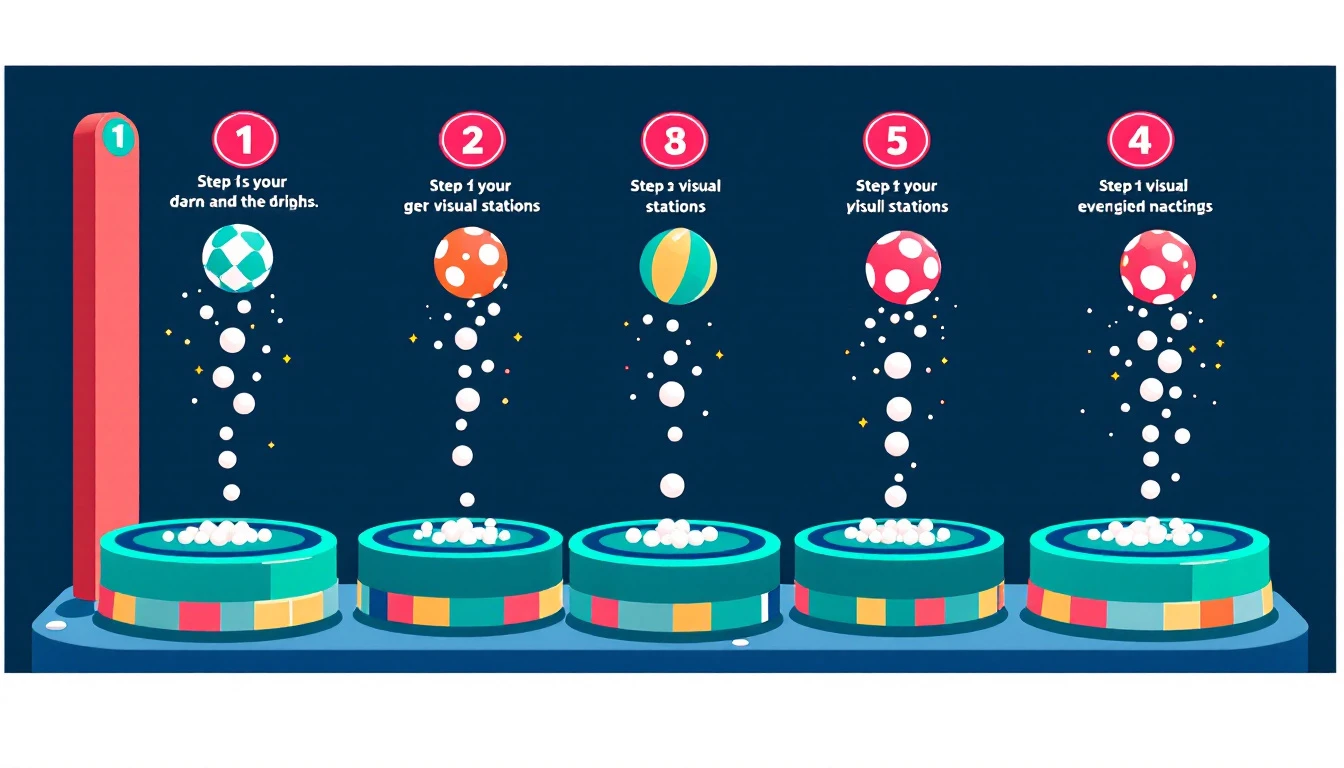
Plinko is one of the easiest casino games to learn and one of the hardest to play well — not because of complicated rules, but because the simplicity of the mechanic disguises the discipline the game demands. This guide walks you through the actual gameplay, the choices you will be asked to make on every drop, the practical questions about getting set up, and the specific mistakes that beginners make and lose money to. By the end you should be ready to drop your first chip at a casino, or at our free demo, with a clear sense of what is happening and what it costs.
A standing note before we start: real-money Plinko is gambling, and gambling is negative-expectation entertainment. Everything below assumes you are playing with money you can comfortably afford to lose, for fun, and within your local laws. If that frame does not fit your situation today, the rest of this page is not for you yet.
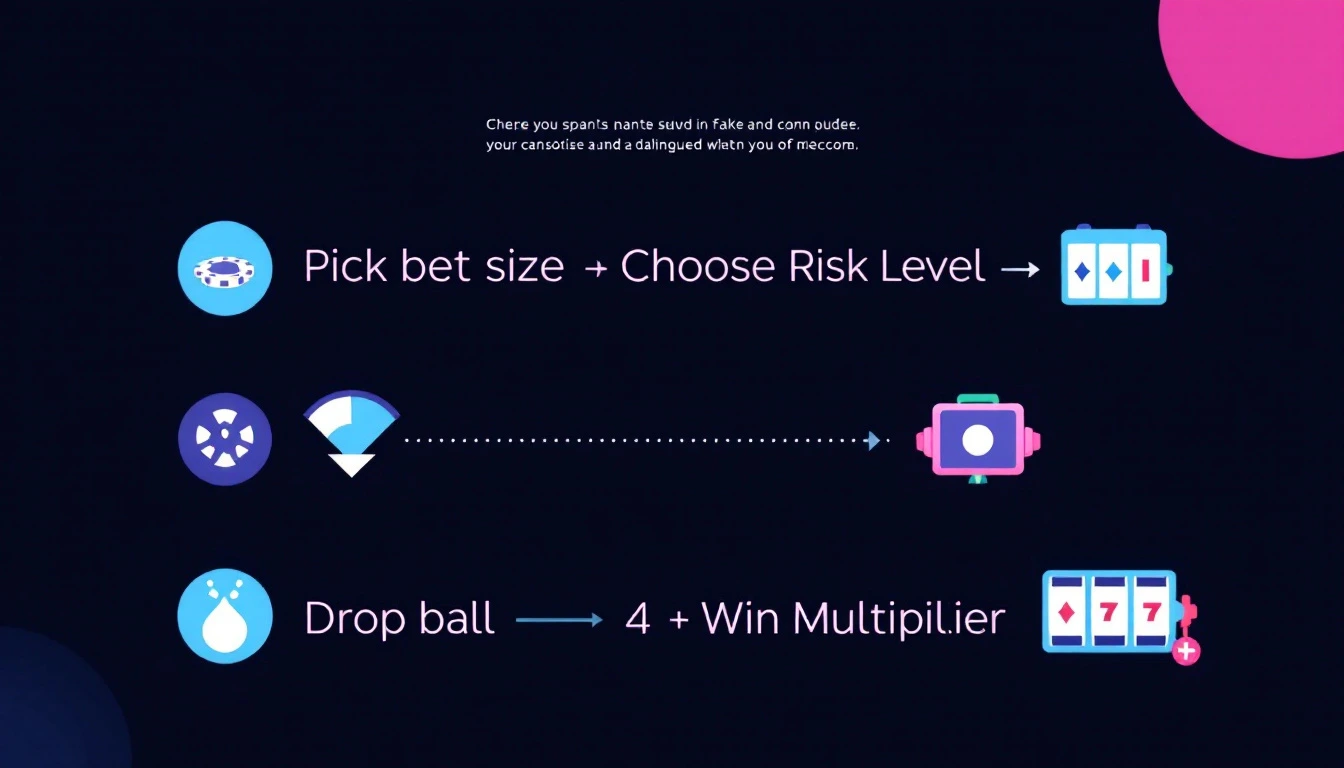 risk level, drop ball, win multiplier"/>
The mechanics, in one paragraph
A Plinko board is a triangular array of pegs. You drop a chip from the top; it bounces randomly left or right at each peg row and lands in one of several slots along the bottom. Each slot pays a multiplier — usually a number between 0.2x (you lose most of your bet) and 1000x (a massive win). The center slots are the most common landing zones and pay the smallest multipliers. The edge slots are very rare landing zones and pay the largest multipliers. You bet a fixed amount per chip, and your payout on each drop is bet × slot multiplier.
That is the whole game. Everything else is configuration.
The choices you make on every drop
When you load a Plinko game, you will see a handful of controls. Their names vary slightly across providers but the choices are universal.
Bet amount. The currency you wager per chip. Minimum is typically around $0.10 (or crypto-equivalent); maximum varies by casino. Start small while you learn.
Number of rows. Usually configurable between 8 and 16. More rows means more pegs in the chip’s path, which means a wider final distribution. On an 8-row board the chip has 9 possible landing slots; on a 16-row board it has 17. More slots means the multiplier table can include more extreme edges.
Risk mode. Usually Low, Medium, or High. Risk mode does not change the long-run RTP of the game; it changes how the RTP is distributed across the multiplier table. Low risk concentrates payouts in the center slots, producing many small wins. High risk concentrates payouts in the edge slots, producing rare large wins and many near-zero outcomes in between. Medium risk is in between.
Drop button (or auto-bet). Click once per drop, or set auto-bet for unattended play. Auto-bet typically lets you specify number of drops, stop-on-win, and stop-on-loss conditions.
That is the entire user interface. Every other on-screen element is presentational.
Choosing a casino
Before you can drop a chip for real money, you need a casino account, a deposit method, and a game you trust. We have a methodology-ranked list at Best Plinko Casinos, with eight operators we currently recommend, but the underlying checklist is simpler:
Licensing. The casino must operate under a recognized gambling license — Malta Gaming Authority, UK Gambling Commission, Curaçao, Kahnawake are the common ones. License number should be visible and verifiable.
Published RTP per game. The casino should display the RTP of every Plinko variant it offers. If it does not, that is information about how the operator treats you as a player.
Payment method that suits you. Crypto casinos offer the fastest Plinko-adjacent experience because deposits and withdrawals process in minutes. Fiat casinos work fine but expect slower withdrawal cycles.
Withdrawal speed evidence. The casino’s published withdrawal SLA matters less than its track record on review platforms (AskGamblers, Trustpilot) and our own measured times.
Plinko catalog depth. A casino with one Plinko variant locks you to that provider’s specific multiplier table. A casino with three or more variants lets you switch providers if one is not paying out to your taste.
If you want to skip the evaluation, our top recommendation for a first Plinko casino is Stake for jurisdictions that allow it, or Roobet for North American crypto players who want a more sportsbook-oriented operator.
Setting up a wallet
If you choose a crypto casino, you will need a cryptocurrency wallet and a way to get crypto into it. The fastest practical path for a beginner:
- Pick a crypto-friendly exchange that operates in your jurisdiction — Coinbase, Kraken, and Binance are the major ones in most markets. Open an account and complete KYC verification (driver’s license, selfie, address).
- Buy a small amount of Bitcoin or Litecoin using a debit card or bank transfer. Litecoin has lower network fees than Bitcoin for small deposits; Bitcoin has the broadest casino support.
- Withdraw from the exchange to your casino deposit address. The casino will display a one-time deposit address; copy it carefully (or use the QR code) and send the amount you want to deposit. Network confirmations take 5 to 30 minutes depending on the chain.
- Verify the deposit. Once the deposit shows in your casino balance, you are ready to play.
A practical note on amounts. Start with the smallest deposit you can — $20-$50 equivalent — until you have placed bets, won, requested a withdrawal, and seen the withdrawal arrive. Until you have done that full loop with a specific casino, you cannot trust it with serious money.
The Wallet Setup guide covers this in more detail. The Withdrawals guide covers what to expect when you cash out.
If you prefer fiat — credit card, bank transfer — the path is shorter: the casino takes your card details, processes the deposit, and you are ready to play. Withdrawal back to fiat is slower (1-5 business days typically) but the on-ramp is faster.
Your first bet
You are at the casino, you have a balance, you have opened a Plinko game. Before you click drop:
Set a session budget. Decide right now, before the first bet, how much you are willing to lose this session. Write it down if you have to. A common starting heuristic: 50 to 100 bets at your chosen bet size — if you want to bet $1 per drop, your session budget is $50-$100.
Set a stop-win, if you want to play with one. Some players walk when they are 50 percent up on the day; some don’t. Either is fine; the discipline is in deciding before, not during.
Choose conservative settings. For a first session: 10 or 12 rows, Low or Medium risk, bet size 1-2 percent of your session bankroll. This is not the most exciting Plinko you can play. It is the Plinko that lets you observe the game’s behavior without burning your stack.
Drop one chip at a time. Do not auto-bet on the first session. Watch each drop. Get a sense of how often the chip lands center, how often it edges, how the multipliers feel. You are gathering data.
After 20-30 drops you will have a feel for the variance. After 100 drops you will have a much better one. That is when you can start changing variables — rows, risk, bet size — with the experience to know what you are changing.
Understanding risk levels
The risk mode is the dial that most affects how a session feels. Below is the practical breakdown.
Low risk produces many small wins and few large ones. On a 16-row Low-risk Plinko, the center slot might pay 0.5x and the edge slot might pay 16x. Most drops will return between 0.5x and 2x; you will see occasional 5-9x drops; the 16x edge is rare but achievable. Bankroll erosion is slow. Sessions are long.
Medium risk broadens the table. The center slot drops to maybe 0.4x; the edge slot rises to maybe 130x. You will see a mix of small losses and small wins, with occasional meaningful 5-25x drops. Sessions feel more dynamic; bankroll volatility is higher.
High risk is the dramatic version. On a 16-row High-risk Plinko, the center slots pay close to nothing (0.2x is common) and the edge slot pays 1000x. You will see long stretches of near-zero returns, punctuated by occasional medium hits and very rare 100x+ moments. This is the Plinko that produces viral screenshots; it is also the Plinko that empties bankrolls fastest if you bet too large.
Same RTP across all three. Different shape.
A useful frame: low risk is closer to playing roulette on red/black (high frequency, low volatility). High risk is closer to playing a single number on roulette (low frequency, high volatility). Choose the shape you find fun and that your bankroll can sustain.
Reading the multiplier table
Every Plinko game shows you the multiplier table on the bottom row before you drop. Take ten seconds to read it. The table tells you several things:
The maximum multiplier — the headline number on the edge slot — tells you how big your largest possible win on a single chip is. Multiply it by your bet size to see the absolute ceiling for the session.
The minimum multiplier — usually 0.2x to 0.5x — tells you how much you lose on the worst-case landing. On a 0.2x slot you lose 80 percent of your bet per drop.
The shape of the table — how quickly multipliers fall from the edge toward the center — tells you about volatility. Sharp drops (1000x → 130x → 26x → 9x → 4x) are high-volatility. Gentler curves are lower-volatility.
A back-of-envelope sanity check: if you can find the multiplier table and the published RTP, you can estimate the implied probabilities. They should add up to the RTP when each multiplier is weighted by its landing probability. The probabilities follow the binomial distribution (see the physics pillar for the math).
Mistakes beginners make
Almost every losing Plinko story we have read traces back to one or more of these.
Chasing losses. A bad streak feels like it is “due” to reverse. The math does not care. Every drop is independent. Increasing bet size to recover losses is the single fastest way to destroy a bankroll. If you find yourself doubling bets after losses, stop the session.
Switching to High risk after a losing stretch. “The edges are due to hit” is the same fallacy as the previous bullet, dressed up. The edges are not due. They are rare every single drop, independent of what came before.
Playing with bet sizes too large for the bankroll. Plinko’s variance is high. A bet size of 5-10 percent of your bankroll on High risk will produce a long enough losing stretch to wipe you out before any large multiplier arrives. The bet-to-bankroll ratio should be measured in fractions of a percent for High-risk play.
Ignoring the multiplier table. Players who do not read the multiplier table before playing routinely confuse “I landed in the middle” with “I won.” A 0.3x landing is a loss. Knowing what the slots pay before you drop saves a lot of confused frustration.
Misreading RTP as a per-session guarantee. RTP is a long-run average across millions of bets. A 99 percent RTP does not mean you keep 99 percent of your bankroll this session — you might keep 80 percent, you might keep 120 percent. RTP is the limit, not the experience.
Falling for prediction software. There is no Plinko prediction tool. Anyone selling one is selling fraud. Provably fair systems prove the casino did not manipulate the drop after the fact; they do not let you forecast it before.
Playing without a stop-loss. Sessions without pre-set stop-losses run longer than they should. The stop-loss is not a clever optimization; it is a guardrail.
Playing while emotional. Anger, frustration, the desperation of a losing streak — none of these improve decisions. The math does not change. If you are not enjoying the session, the session is over.
Where to practice for free
We host a no-signup Plinko demo at /play-free/demo/. The mechanics are identical to a real-money game — same Galton board, same risk modes, same multiplier shapes — but with no money at stake. Use it to:
- Get comfortable with the interface before depositing
- Test the difference between Low, Medium, and High risk
- See how 16 rows feels compared to 8 or 12
- Build a sense of how often edge slots actually hit (spoiler: less than your intuition says)
Other free-play options exist. Arkadium has a family-game Plinko adaptation that is browser-based and fun for casual play. The Washington Post hosts a puzzle-adjacent Plinko-style game. Many casino providers offer free-play modes on their games even without signup — BGaming and Spribe both publish demo URLs.
The full breakdown is on the Play Free pillar.
When to move from free play to real money
The transition does not need to be dramatic. The practical sequence we recommend:
- Play 200+ drops in free mode across at least two risk modes. Get a real feel for the variance.
- Open a casino account and deposit the minimum. Place 20-30 small bets. Test the user experience end-to-end.
- Request a small withdrawal. Even if you have not won meaningfully yet — withdraw whatever you have left. Verify the casino actually pays out.
- Only after the withdrawal completes should you consider depositing the bankroll you actually want to play with.
Skipping the small-withdrawal step is the most common reason players lose money to bad operators. Some casinos that look fine on signup turn out to delay withdrawals indefinitely; finding that out with a $20 test is much cheaper than finding out with $500.
Reading the receipts
After every session, especially in the first few weeks, look at the bet history. Most casinos provide one — a chronological list of every bet, the result, and the running balance. Reviewing the bet history is the fastest way to internalize the variance. You will notice:
- The center slots really do account for the vast majority of landings.
- The edge multipliers really do hit occasionally — usually when you are not expecting them.
- Your sessions usually finish in a small positive or small negative range, with occasional outliers.
Players who review their bet histories tend to develop better intuitions about Plinko than players who only remember the wins.
Where to go next
You have the mechanics. The next layer of depth is in the related pillars:
- Plinko Strategy — what works, what does not, and why all the “winning systems” you will encounter are mathematically broken.
- Plinko RTP Explained — the math of why the house edge exists and what 99 percent RTP actually buys you.
- Provably Fair Plinko — how to verify each drop was not manipulated, with a step-by-step walkthrough.
- Best Plinko Casinos — our ranked list of operators if you are choosing where to play.
- Every Plinko Game Explained — provider-by-provider breakdown of the major Plinko variants.
Drop slowly. Bet small. Have fun.